
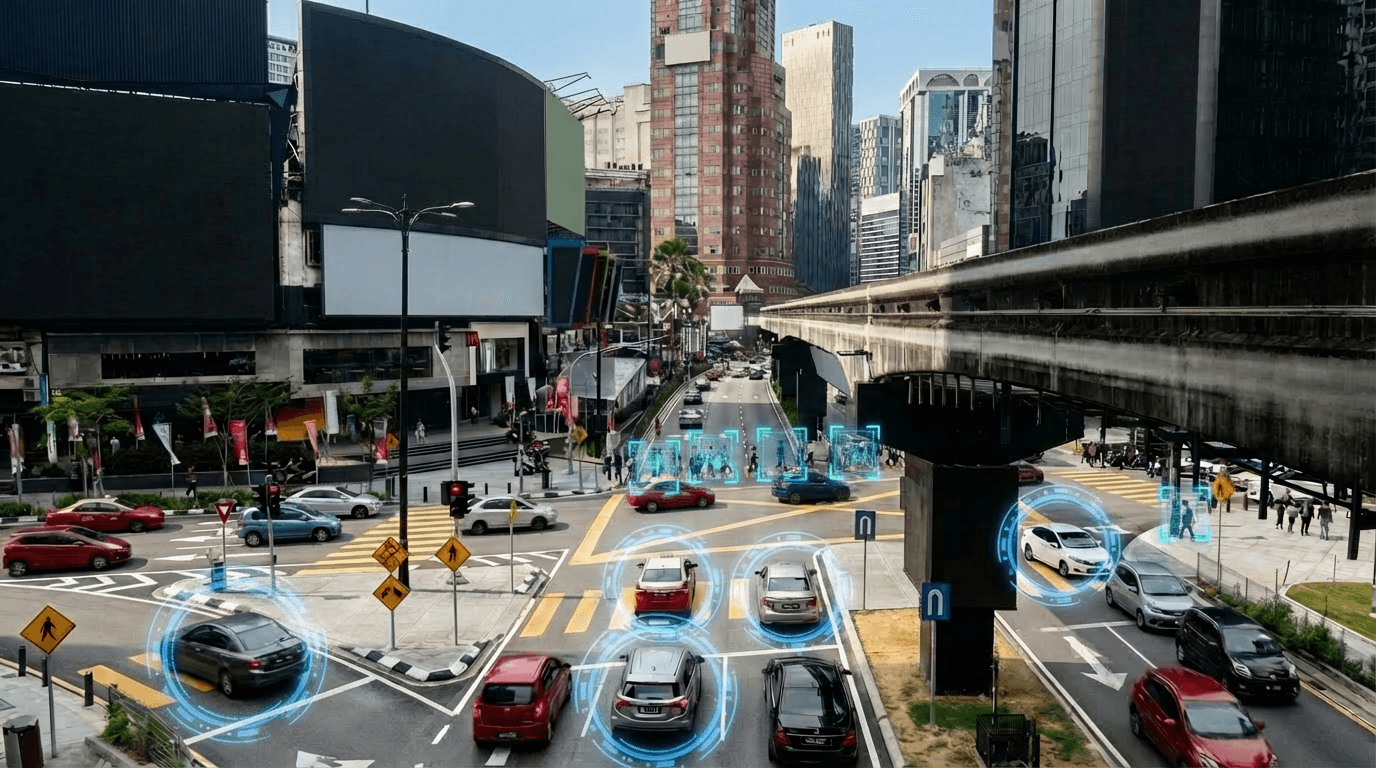
ANPR Malaysia: From 50% to 95% Accuracy – A National Enforcement Case Study
Half the images required manual review. Half the plates were not being recognised accurately. For a national road transport authority managing 80,000 to 120,000 monthly enforcement images, manual processing at that scale is not just inefficient. It creates backlogs, delays enforcement action, and turns low recognition accuracy into an operational failure.
That was the baseline before Infomina AiMod was deployed. This article documents how a Malaysian government enforcement department enhanced its existing enforcement workflow with sovereign, on-premise AI-powered automated number plate recognition (ANPR), reducing manual processing pressure while improving recognition accuracy at national scale. You can also read the full deployment summary in the OCR Accuracy success story.
The Operational Challenge of High-Volume Enforcement Processing
National road enforcement generates a volume of visual data that is difficult to process efficiently through manual review alone. The challenges were not theoretical – they were operationally costly every day.
Volume Beyond Capacity
The department processes an average of 4,000 images daily, with peak periods reaching 20,000 images in a single day. With baseline accuracy at 50–60%, nearly half of all captured images required manual officer review – creating backlogs that delayed enforcement action by days.
Environmental Degradation
Road enforcement imagery is rarely clean. Motion blur from high-speed vehicles, inconsistent lighting across day and night captures, weather interference, and partially obscured plates can all reduce the quality of raw images before processing begins. AiMod enhances this workflow by applying AI-powered computer vision to improve plate detection, extract cleaner recognition outputs, and process difficult images faster, reducing the time officers spend manually reviewing unclear captures.
Sovereignty as a Hard Constraint
As a government body managing sensitive vehicle and citizen data, cloud-based AI processing was not an option the department could consider. Malaysia's public sector digitalisation directive requires that national enforcement data remain within secure government infrastructure. Any ANPR solution needed to operate fully on-premise – not as a preference, but as a non-negotiable compliance requirement.
The AiMod Deployment: Sovereign Computer Vision at National Scale
Infomina AiMod was deployed directly into the department's existing infrastructure as part of its Public Sector AI solutions. New GPU hardware was integrated into the department's own servers, keeping all AI computation within the secure government environment. No data left the perimeter.
The enforcement workflow runs through three coordinated components:
Cognitive Ingestion Agent (CIA)
The CIA acts as the visual processing layer. It applies advanced computer vision to handle the full spectrum of road enforcement imagery – low-light captures, motion-blurred frames, partially obscured plates, and high-speed vehicle passes. The agent converts raw images into structured data payloads, dramatically reducing the volume that requires human review.
Validation Workspace
Not every decision is fully automated. The platform includes a validation workspace where officers review flagged images – those where the AI has identified ambiguity or low confidence. Bounding boxes pinpoint the precise plate area for officer review. Every validation action is recorded, creating a 100% auditable enforcement trail that satisfies legal accountability requirements.
Decision Agent (DA)
Once validated, the DA converts visual recognition outputs into structured enforcement reports – providing officers with actionable intelligence within minutes of image capture, rather than days.
Results: What Changed After Deployment
The outcomes were measurable and immediate:
- Recognition accuracy nearly doubled, improving to over 97% and significantly reducing the volume of images requiring manual office review.
- Throughput scaled to handle daily peaks of 20,000 images without increasing officer headcount
- All data remained within Malaysian government infrastructure – zero external data transfers
- A complete audit trail was established for every enforcement decision, satisfying legal and regulatory accountability requirements
What This Means for Government Agencies Evaluating ANPR
ANPR is already a valuable enforcement tool, but its effectiveness depends on the quality of the images it processes and the time required to validate each output. By enhancing ANPR with AI-powered computer vision, government agencies can improve recognition quality, reduce manual review time, and process high-volume enforcement data more efficiently. The result is not just better accuracy, but a faster and more reliable workflow for officers working at national scale. For any government agency or smart city team evaluating enforcement intelligence infrastructure, three questions matter:
- Can AI enhance recognition accuracy and output quality without adding unnecessary cost to the enforcement workflow?
- Can it operate entirely within sovereign government infrastructure?
- Does it provide an audit trail sufficient for legal enforcement proceedings?
This deployment shows how AI-enhanced ANPR can support all three priorities, improving recognition quality, reducing manual review time, and keeping enforcement data within a secure on-premise environment. Read the full case study at the OCR Accuracy success story page, or explore Infomina's full Public Sector AI capabilities.